
“Four Quadrants, Zero Clarity? Let’s Fix That”
“Structure First, Sherlock: Then Go Hunting for Symptoms. Lets learn quickly organs present in all four quadrants of abdomen and abdominal nursing assessment. what organs to assess in quadrants.
Love
5/1/20262 min read


GastroIntestinal System
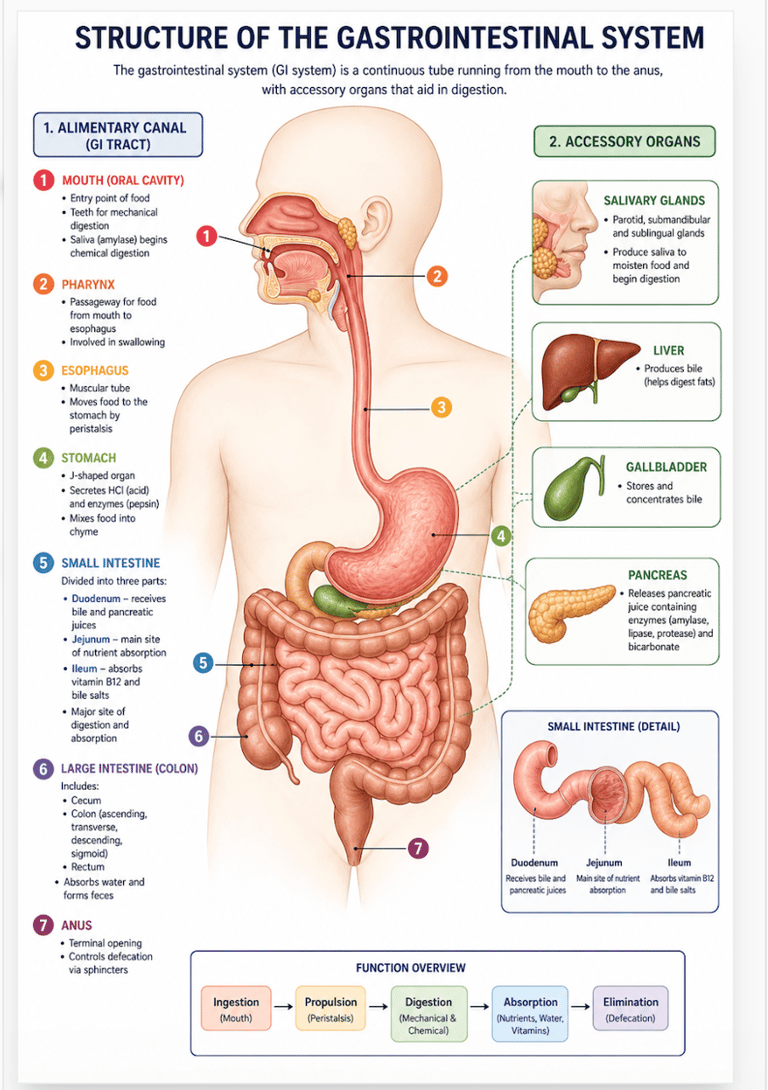
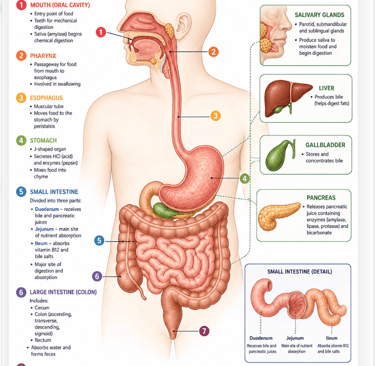
The gastrointestinal system is also known as the gastrointestinal tract, the digestive system, or the alimentary canal, which is approximately 10m long.
There are various structures and organs are included:-
Mouth
Pharynx
Oesophagus
Stomach
Small intestine
Large intestine
There are various accessory organs that enhances the functions of gastrointestinal system:
Salivary glands
Liver
Gall bladder
Pancreas
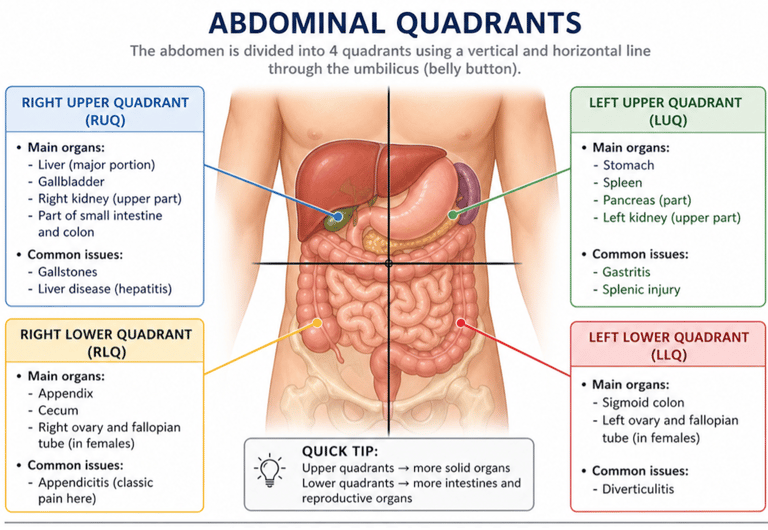
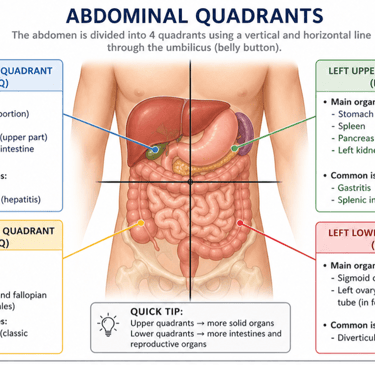
Quadrants in Abdomen:
Right upper Quadrant (RUQ)
Left Upper Quadrant (LUQ)
Right Lower Quadrant (RLQ)
Left Lower Quadrant (LLQ)
Right upper Quadrant (RUQ) :
Right lobe liver
Gall bladder
Pylorus
Duodenum
Head of pancreas
Hepatic flexure colon
Aspects of ascending and transverse colon
Left upper quadrant ( LUQ) :
Left liver lobe
Stomach
Body of pancreas
Splenic flexure of colon
Aspects of transverse and descending colon
Right lower quadrant (RLQ):
Caecum and appendix
Aspects of ascending colon
Left lower quadrant (LLQ):
·Sigmoid colon
Aspects of descending colon.
It is important to get a detailed history and perform physical examination techniques, for instance, inspection, palpation, percussion and auscultation.
Focused gastrointestinal assessment may include the following:
Chief complaint
Present health status
Past health history
Current lifestyle
Psychosocial status
Family history
Physical assessment
Past health history:
Ask patient about any previous abdominal surgery and trauma.
Ask patient about past history of gastrointestinal disorders, for instance,
Gall bladder disease
Inflammatory bowel disease
Hernias
Appendicitis
Medication history:
Ask patient about the history of previous medications. Some medications may have some gastrointestinal side effects. Ask patient if they are taking any opioids and non-steroidal anti-inflammatory drugs and antibiotics.
Maybe they are taking any over the counter medications.
Social History :
Ask the patient about the frequency of alcohol consumption, cigarette smoking and their caffeine intake due to the reason for liver cirrhosis and gastric ulcers.
Family history:
It is important to seek family history as some disorders may be hereditary, for instance, Crohn’s disease.
Nutritional assessment:
Unintentional weight loss
Receiving any chemotherapy
Weight gain
Food allergies
Multiple medications
Decreased appetite
Physical examination:
There are various skills used by the nurses including the following :
Inspection
Auscultation
Percussion
Palpation